01Initial Situation
Fabric dyed by rotary printing needed to reach the required surface temperature before winding, with controlled drying of the dye. Monitoring the moving product's surface temperature required drying to be considered alongside the production line's operating pattern.
At the start of the project, dyeing and winding speed was 20 m/min. A purpose-built system had to be developed from scratch to fit the existing line, continuously measure the fabric surface and independently manage the heating zones. An 80 kW installed-capacity, two-zone heating arrangement was designed for this purpose.
02Applied Solution
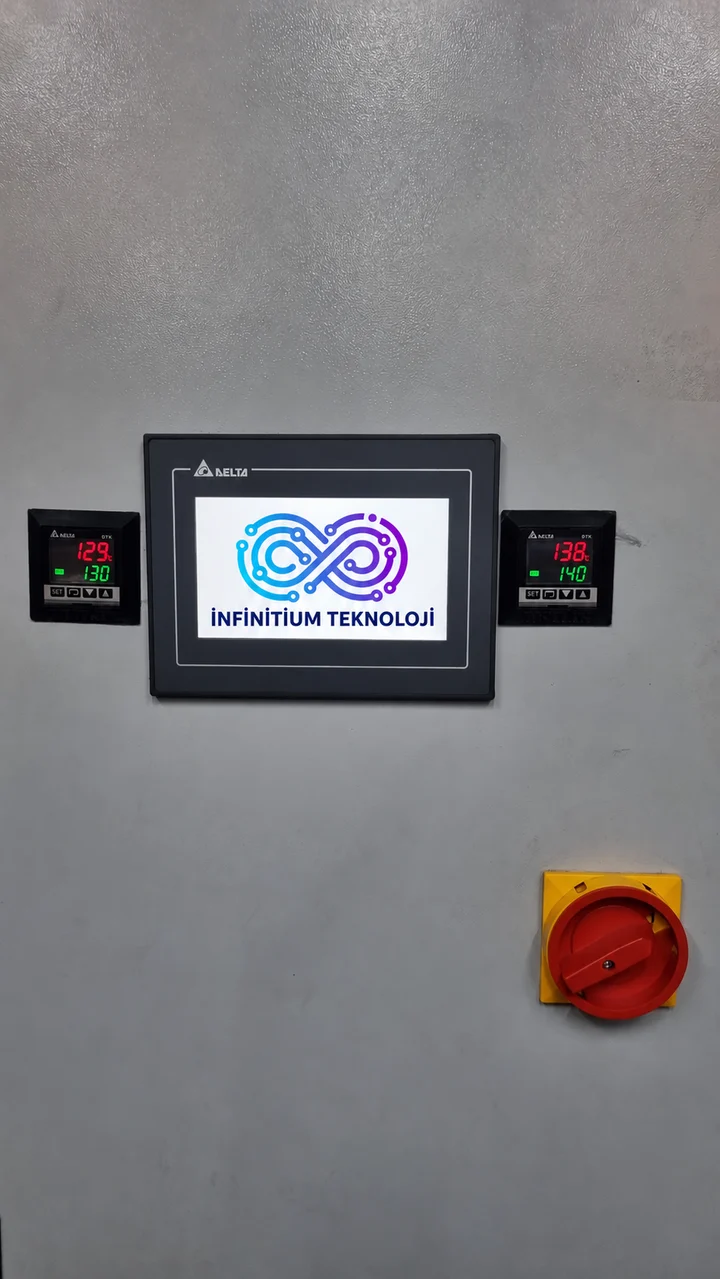
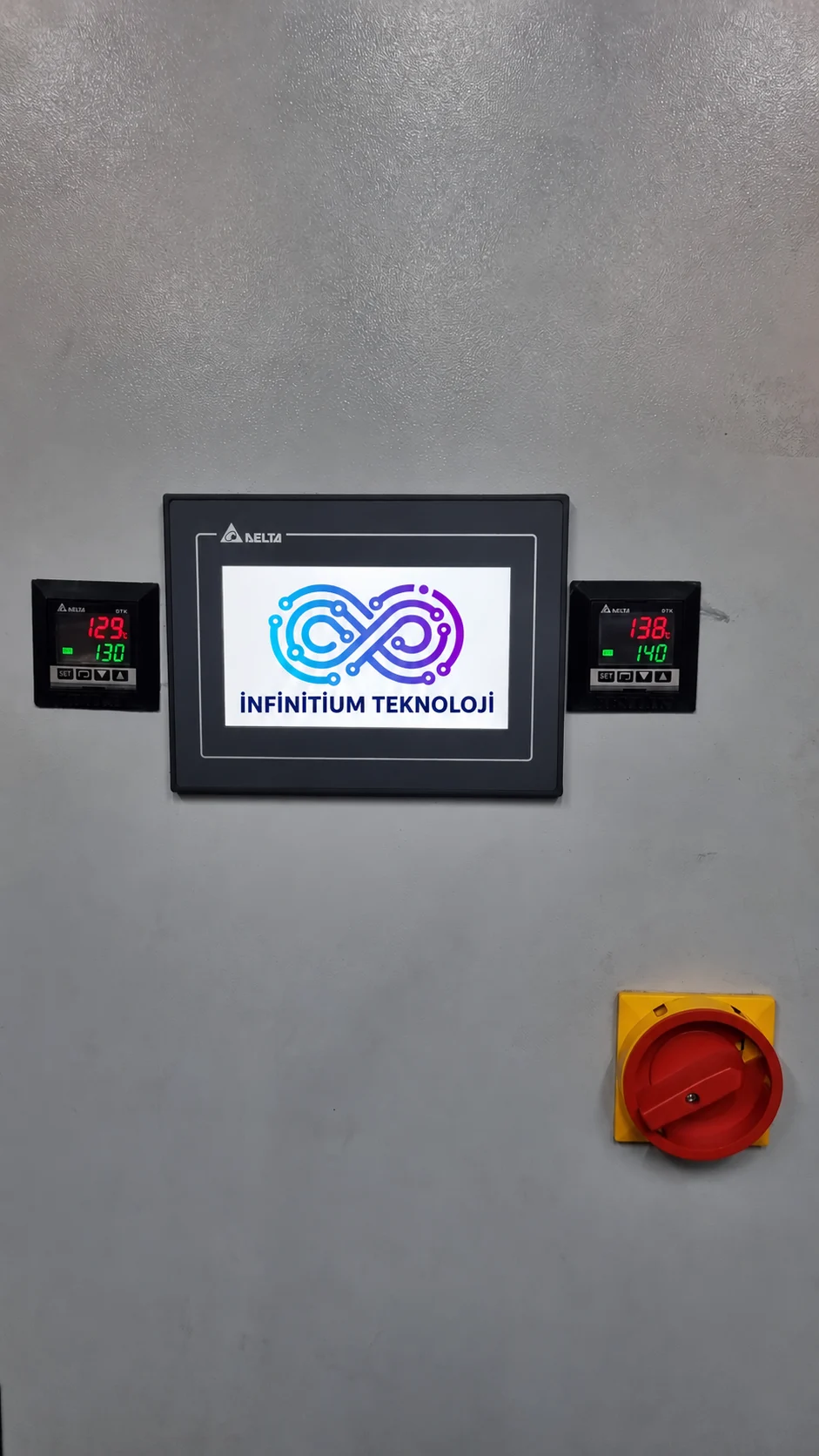
The system used two independent heating zones suited to the existing production line. Control was provided by a Delta PLC, Delta HMI and two Delta temperature controllers. Resistance heater power was controlled through SSRs, allowing each zone's temperature to be managed separately.
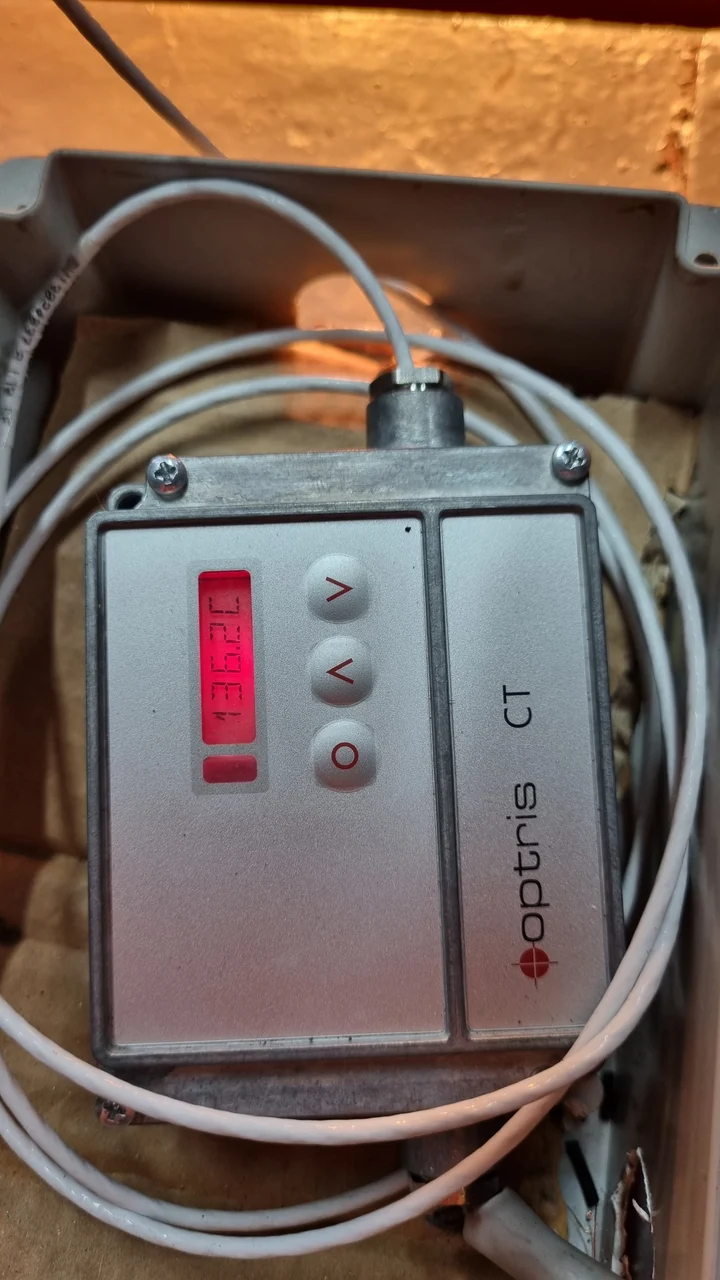
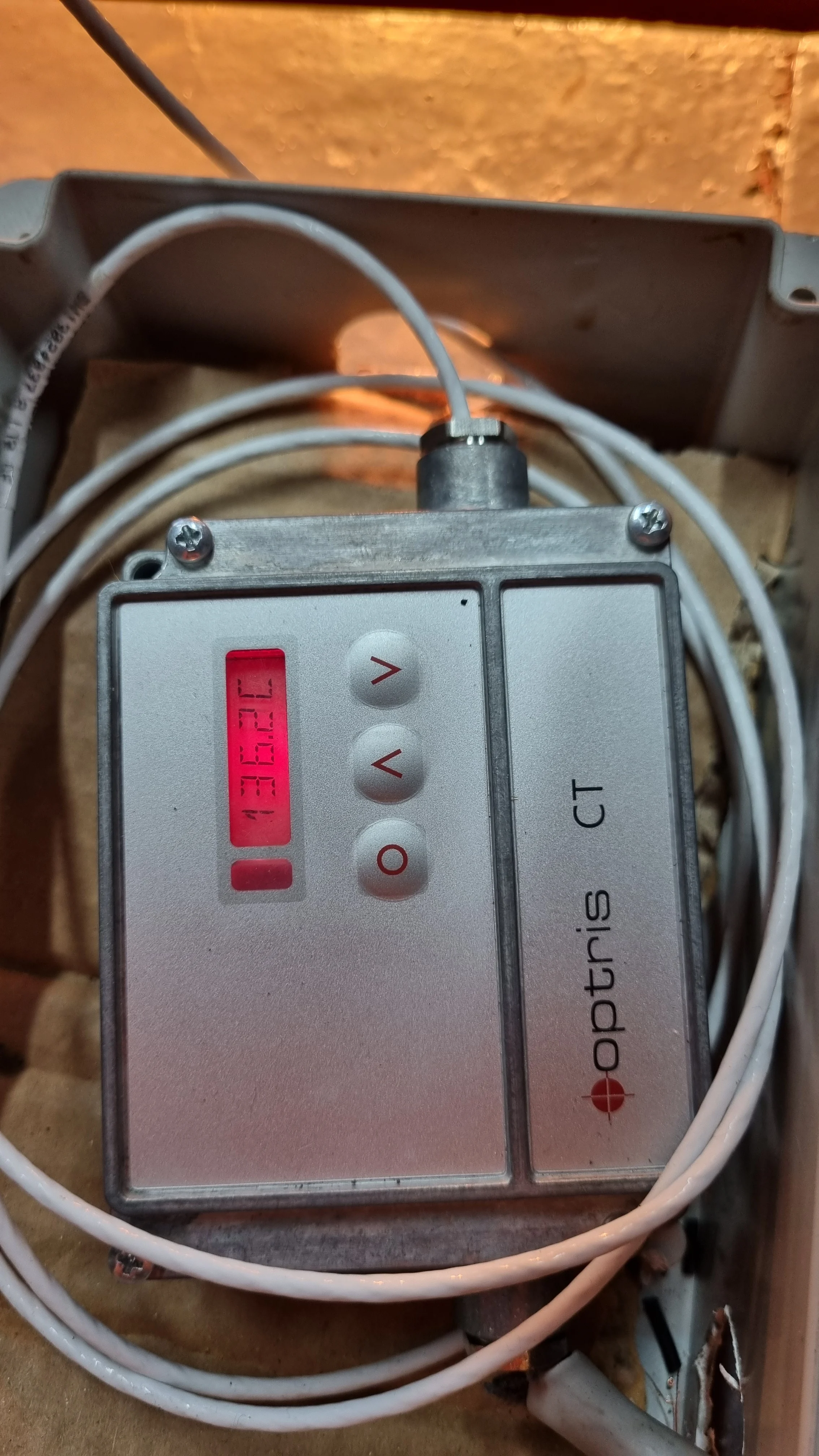
Fabric surface temperature was continuously measured using two Optris non-contact sensors. Measuring the product surface allowed the temperature reached by the moving fabric to be monitored without contact. PID settings were optimised for actual site conditions; panel manufacture, the control system, software and commissioning were delivered as complementary parts of the same implementation.
03Technical Assessment
Managing the two heating zones independently allowed the resistance heater power in each zone to be controlled. SSR-based power control and non-contact surface measurement were combined in one implementation. Measuring temperature without touching the fabric made it possible to monitor the surface of the moving product.
In this project, the panel, Delta PLC and HMI, temperature controllers, Optris sensors and software were treated as an integrated system suited to the production line. The technical assessment focused not only on installed heating capacity but on managing the fabric's surface temperature before winding together with the dye drying process. The heating installation was therefore commissioned in line with the existing line's operating pattern.
04PID Temperature Control
PID (proportional–integral–derivative) control regulates heating power by evaluating the difference between measured and target temperatures. The proportional component responds to the current error, the integral component to accumulated error over time, and the derivative component to the rate of change of error. Correct tuning of these components is important for keeping temperature stable around the setpoint.
PID settings were optimised for the production line's actual site conditions. Control focused on the moving fabric's surface temperature before winding and the dye drying process. Combined with non-contact surface measurement and SSR-based resistance heater power control, these settings helped manage process temperature consistently.
05Implementation Result
The entire project, including panel manufacture, the control system, software and commissioning, was delivered operational to the customer within one week. Controlled heating maintained the target temperature with 0.3 °C precision and improved dye drying performance after rotary printing.
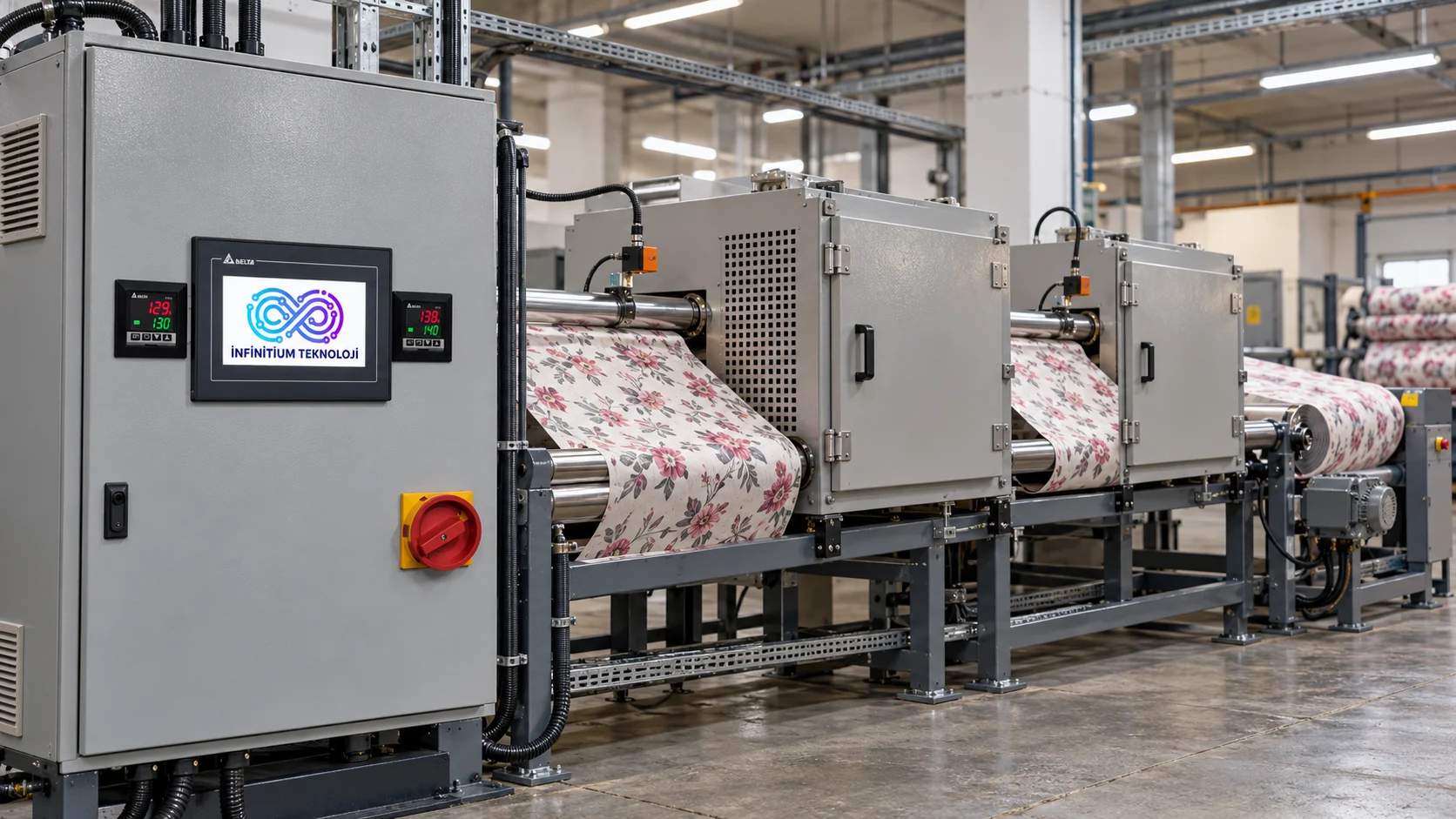
After commissioning, dyeing and winding speed increased from 20 m/min to 40–44 m/min. Drying ceased to be the stage limiting production speed, allowing the existing line to operate faster. The operating video shows the heating zone, fabric moving along the line and the control panel.
| Stage | Line speed |
|---|---|
| Before implementation | 20 m/min |
| After commissioning | 40–44 m/min |
Operating footage of the heating zone, fabric moving along the line and the control panel.
06Project Outcomes
“Since the 80 kW heating system was commissioned, we have been able to maintain process temperature with a stability we could not achieve before. PLC–HMI integration has made operation easier and lets us see what is happening in the system in real time. Optimising the PID settings for our site conditions has brought substantial consistency to production.”
C. G. · Production Supervisor